

📋 Get the Free Event Planning Checklist
Free Chicago Event Planning Checklist
Everything you need to plan a seamless event. Enter your info below.

Short answer: A private event space in Chicago typically costs far more than the venue fee alone. Expect the rental rate plus staffing, tables and chairs, linens, bar and glassware, event insurance, cleaning, and potential overtime. The venue fee is often only 40 to 60 percent of your total room cost. Ask every venue for the full list before comparing quotes.

Let’s talk about the thing every venue website is weird about.
You’re on your fourth tab of the evening. Three of the venues you’ve looked at say “contact us for pricing,” one says “packages starting at” a number that is clearly a fantasy, and none of them will tell you what the actual out-the-door cost is going to be. You’re starting to suspect the vagueness is on purpose.
Sometimes it is! But often it’s because the honest answer is genuinely complicated, and venues have learned that a big number with no context sends people running before they understand what’s inside it.
So let’s do the uncomfortable thing and lay the whole stack out. Not to scare you — to make you dangerous. By the end of this, you’ll be able to look at any two venue quotes in this city and know which one is actually cheaper, which is a different question from which one has the smaller number on it.
The nine things you’re actually paying for
1. The venue rental fee
The headline number. Usually hourly or a flat block, and it varies wildly by day of week and time of year. A Saturday in October and a Wednesday in February are not the same product and shouldn’t cost the same.
Hourly event rentals start at $165, with a three-hour weekday minimum. Wedding packages range between $3,000-$5,500 depending on day of the week and time of year.
The question to ask every venue: is this the whole room or one section? Our space is 4,800 square feet split into two connected sides — 2,200 usable on the west, 2,000 on the east. You can book one side or the whole thing, and that choice moves your number significantly. A lot of venues quote you their smallest configuration and let you discover the rest later.
2. Hours — including the ones you forget
This is the single biggest budgeting mistake I see, and it’s not close.
Your party is 6 to 10 pm. Your rental is not 6 to 10 pm. Somebody has to carry tables in, set the bar, stage the food, hang whatever you’re hanging. And then at the end of the night, all of it has to come back out.
At our space, load-in, setup, teardown, and load-out all live inside your booked hours. Overtime is billed hourly, and exit time is monitored by hallway cameras — not because we enjoy being the bad guy, but because the next event has a load-in of their own.
So when you’re comparing venues: a venue at a lower hourly rate that requires four hours of setup buffer can easily cost more than a higher rate with a faster turn. Do the math on total hours, not on the rate.
One thing to factor into your budget is time for setup and teardown. Often people underestimate how much access they’ll need to the space, not only for themselves but also their vendors. Do you have a special decor piece like a balloon installation or a softplay moment? Often vendors will need to enter an hour or two before an event in order to prepare. You’ll want to factor this time in when planning your expenses and reserving the space to make sure that window doesn’t get booked up.
3. Tables, chairs, and the entire physical world
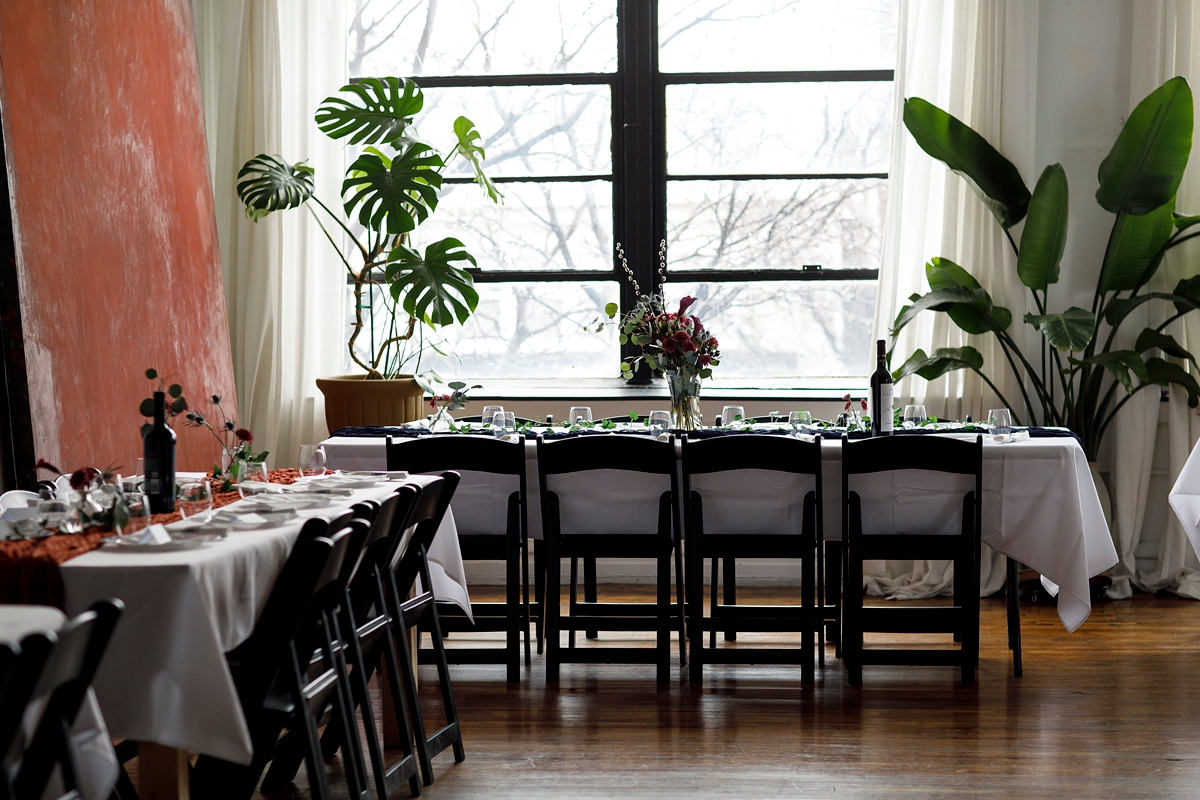
Blank-canvas venues are wonderful, creatively speaking. They also mean the furniture is a separate purchase. Tables, chairs, linens, plates, glassware, flatware, and delivery — delivery is its own line, and it isn’t small.
Rough scale: rentals for a seated dinner commonly run more than people expect, sometimes rivaling a chunk of the venue fee. Ask your venue what’s included in-house versus what has to be trucked in. Every item that’s already in the building is money you don’t spend twice. At Le Loft, we offer tables and chairs for a flat $100 and linens for $65 per side, as well as a few other add-ons like high tops and florals.
4. Staffing
Event manager or on-site coordinator, bartenders, servers, security if your headcount or hours require it. Some venues include a staff member, some require you to hire through them, some let you bring your own. All three models are fine. What’s not fine is finding out which one you’re in three weeks before the event.
5. Bar
Enormous variable, and where BYOB venues create real savings. Buying your own beer, wine, and spirits at retail versus paying a per-head open bar package is often the difference between a comfortable budget and a painful one. We break down how that works in our post on BYOB rules for Chicago venues — read it before you accept anyone’s per-person bar quote.
Don’t forget the unsexy parts: ice, mixers, garnish, cups, and a licensed bartender if required.
6. Catering — and what the kitchen can actually do
Per-head food cost is its own universe, but here’s the venue-side detail that changes your quote: what kind of kitchen is on site?
We have two kitchens, one per side, each with a stove and a refrigerator. They’re apartment-style, not commercial. That’s genuinely great for prep, plating, and holding food hot — and it means your caterer should plan to finish food here, not cook it from scratch. Caterers who know that in advance quote accurately. Caterers who find out on the day charge you for the surprise.
Also worth knowing before you book: we’re a real loft, so load-in is 20 stairs with no elevator. Tell your caterer. Tell your rental company. It affects their crew size and therefore your invoice.
7. Event insurance
Usually a certificate of liability, usually available online, usually cheaper than people fear. Nearly every real venue requires it. Budget for it, get it early, and make sure your vendors carry their own. Insurance coverage ranges from $100 to $200 depending on the event.
8. Cleaning and damage deposit
Sometimes bundled, sometimes not. Ask whether “cleaning” means a full reset or just trash removal, and what condition you’re expected to leave the room in.
9. The stuff that only shows up on the final invoice
Overtime. Extra hours you added the week of. A rental delivery that arrived outside the window. Parking or loading permits. Card processing fees. None of these are scams — they’re just the difference between the quote and the total, and you should build a 10 to 15 percent contingency line for them.

How to compare two venues honestly
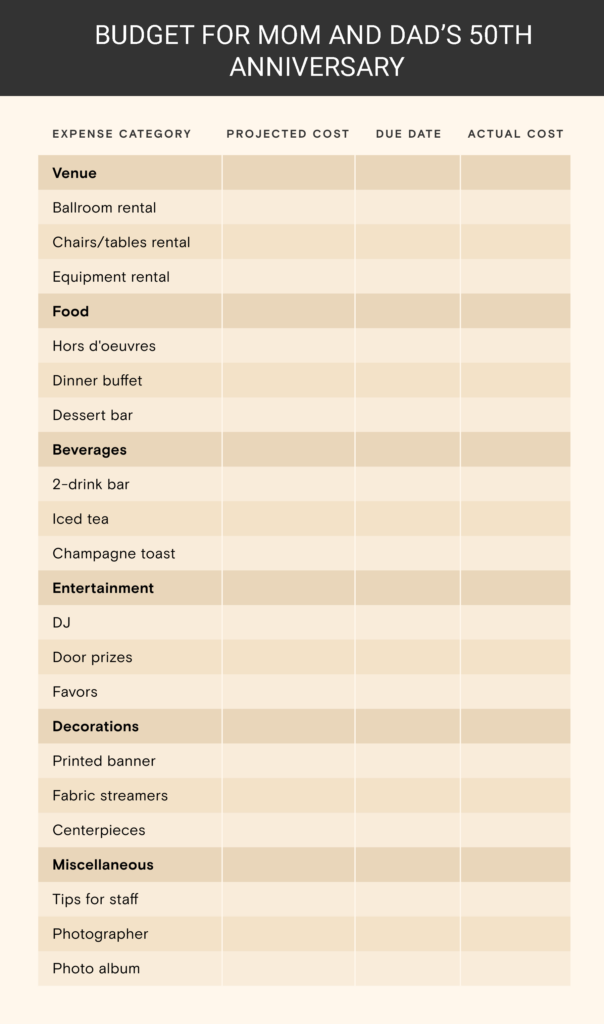
Build one sheet. For each venue, fill in: total hours needed including setup and teardown, venue fee for those hours, what’s included in-house, what you have to rent, staffing model and cost, bar model, insurance requirement, cleaning, and stated overtime rate.
Then look at the bottom line — not the headline.
You will find, reliably, that the venue with the scariest-looking rate is sometimes the cheapest, because chairs and a kitchen and a coordinator are already in the building. And the “affordable” one turns out to be a rate on an empty box with a four-hour setup requirement and a mandatory catering partner.
Where weddings are different
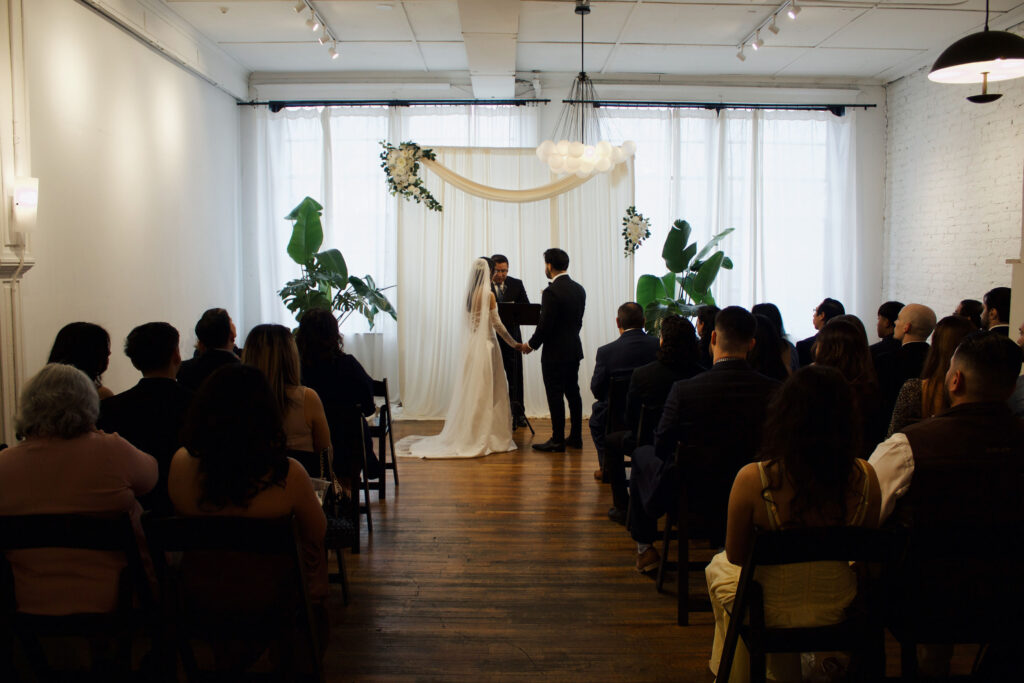
Wedding costs behave differently enough that they deserve their own math — more hours, more rentals, a ceremony-to-reception turnover, and a music cutoff of 11 pm rather than the midnight you get for other events. We already broke that down in a realistic budget breakdown for a Chicago loft wedding. Start there if you’re planning a wedding, and use this post for everything else.
The actual point
The goal isn’t to find the cheapest room in Chicago. It’s to stop being surprised.
Every planner I know who’s had a genuinely stressful event had the same root cause: a cost they didn’t see coming, discovered too late to design around. Every planner who had a great time knew their whole number in month one and spent the remaining months on the fun decisions.
Ask for the full list. Any venue worth your December Saturday will hand it over without flinching.
Get the Le Loft pricing guide → · Ask us anything →
FAQ
How much does it cost to rent an event space in Chicago? Hourly events start at $165/hour with a three-hour minimum— needs a real range to be useful. Structure: “Chicago event spaces typically range from $X to $Y per hour depending on size, day of week, and season. At Le Loft, rates run [range] for [configuration].”
What costs are usually not included in a venue rental fee? Tables, chairs, linens, glassware, catering, bar, event insurance, and sometimes staffing and cleaning. Setup and teardown hours are also frequently billable, which catches people out.
Do I have to pay for setup and cleanup time? At Le Loft, yes — load-in, setup, teardown, and load-out all need to fit inside your booked hours. Overtime is billed hourly, and exit time is monitored via hallway cameras.
Is BYOB cheaper than a bar package? Usually, and often substantially. Buying alcohol at retail rather than paying per-head typically saves money for events over about 40 guests, though you still need to budget ice, mixers, glassware, and a bartender.
How big is Le Loft and how many people fit? 4,800 square feet total — 2,200 usable on the west side, 2,000 on the east. Capacity is 75 on the west, 60 on the east, and 99 for the full space.
Does Le Loft have a commercial kitchen? No. There are two kitchens, one per side, each with a stove and refrigerator — apartment-style rather than commercial. They work well for catering prep and plating.
Le Loft Chicago · Wicker Park
Thinking about hosting an event at Le Loft?
4,800 sq ft of converted factory space in Logan Square / Wicker Park. Flexible pricing, open catering, BYOB, and no boring conference rooms.